The buyer's guide
Buying a home in Toronto.
Six short steps from first budget to keys in hand — with the numbers that matter for Toronto and the GTA.

Money first
Know your number before you know your neighbourhood.
Start from the monthly payment you can actually live with — not the maximum a lender will stretch to — then get pre-approved in writing. Lenders test you at your rate plus 2% (minimum 5.25%), so the approval is deliberately conservative. Treat that as a feature.
Do these first
- Set your real monthly budget, then work back to a price
- Get a written pre-approval — the rate holds for 90–120 days
- Know your down-payment tier (below)
Minimum down payment in Canada
| Purchase price | Minimum down payment |
|---|---|
| Up to $500,000 | 5% of the purchase price |
| $500,000 to $1,499,999 | 5% of the first $500,000, plus 10% of the portion above $500,000 |
| $1,500,000 and above | 20% of the purchase price |
With less than 20% down, federally regulated lenders require mortgage default insurance (commonly called CMHC insurance). The premium is usually added to your mortgage rather than paid up front, and it raises your effective borrowing cost. Your lender or broker can quote the exact premium for your situation.
How much can I afford?
Your maximum price from income, debts and down payment — the same ratios lenders use.
Run the numbers →Mortgage calculator
Payment by frequency and your all-in monthly cost.
Estimate payments →
The true cost
The listing price isn't the whole price — plan for roughly 1.5–4% more.
The deposit comes first: around 5% of the offer price, due within about 24 hours of acceptance, in certified funds. Then the closing costs — and inside the City of Toronto, land transfer tax is charged twice. It's the biggest line on the bill; estimate yours below.
Budget for
- Deposit — liquid before you offer (~5% of price)
- Ontario + Toronto land transfer taxes
- Legal fees, title insurance, home inspection
- Adjustments, moving, locks
The Toronto line item
Two land transfer taxes, one estimate
Buy inside the City of Toronto and you pay land transfer tax twice — once to Ontario, once to the City. First-time buyers can get up to $8,475 back. Estimate yours:
Rebates are applied only when "Yes" is selected — first-time-buyer eligibility has specific conditions, so confirm yours with your lawyer.
Estimated total land transfer tax
$0
- Ontario land transfer tax
- $0
- Toronto municipal land transfer tax
- $0
- Ontario first-time buyer rebate
- $0
- Toronto first-time buyer rebate
- $0
Estimate only. Rates, rules and rebates change, and Toronto's additional rate bands on homes above $3 million are not modelled here — your actual tax on a high-value Toronto purchase may be higher. Confirm exact figures with your real estate lawyer.
Your team
Representation is a legal relationship — get it in writing.
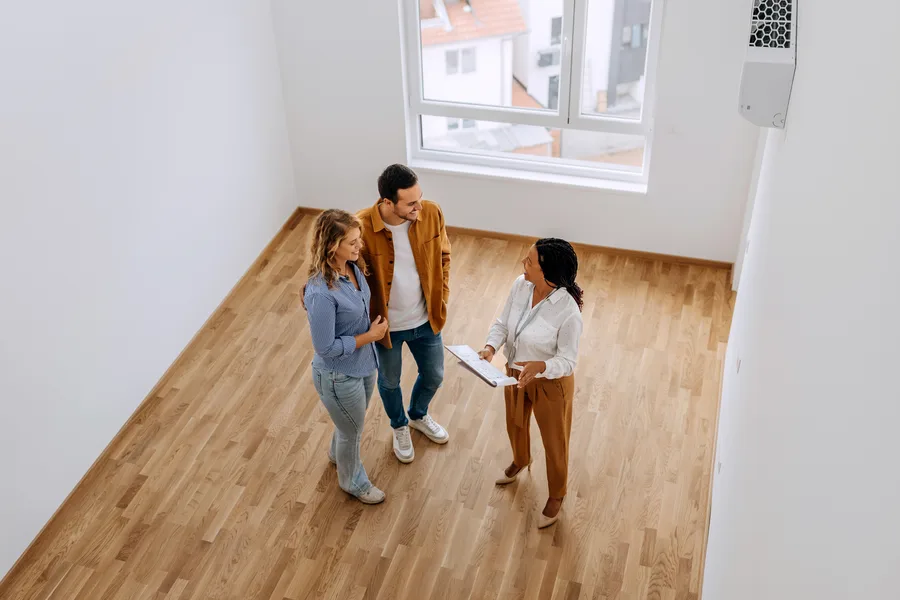
In Ontario your agent must give you the RECO Information Guide and explain your options before working with you. Compensation is negotiable and lives in your buyer representation agreement — ask exactly how your agent is paid. A real estate lawyer closes the deal; line one up early.
Line up
- Read the RECO Information Guide — it's short
- Sign buyer representation knowingly; ask how your agent is paid
- Choose your lawyer and home inspector early
The search
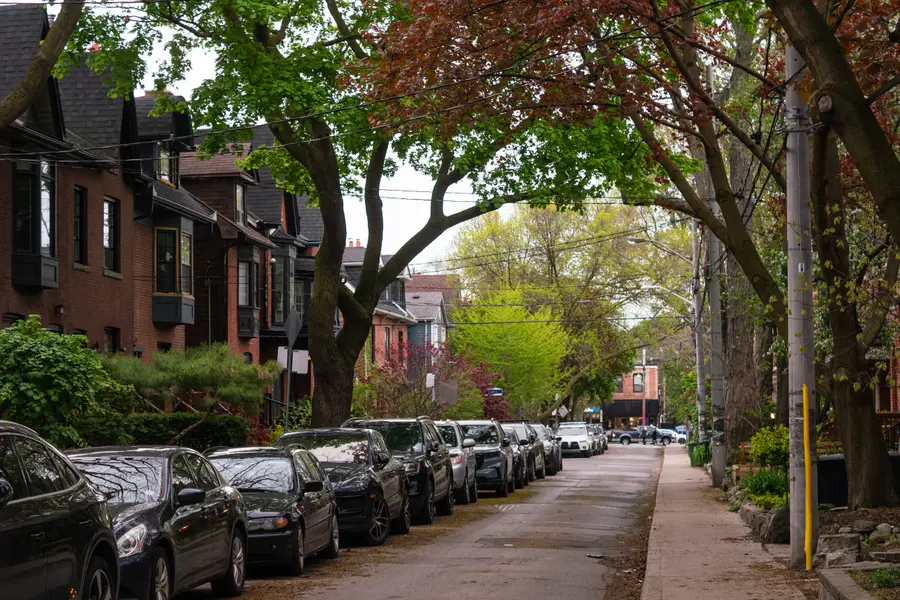
Neighbourhood first. You can renovate a house — not its location.
Judge areas on sold prices, not asking prices, and visit at the hours you'd actually live there. At viewings, look past the staging at the expensive parts: roof, furnace, windows, basement. Buying a condo? The status certificate is the building's health report — $100, delivered within 10 days. Have your lawyer read it before you're firm.
At every viewing
- Rush-hour test the commute
- Check roof, furnace, electrical panel, moisture
- Condos: order and review the status certificate
The offer
Price is one term of many — conditions are your protection.
Financing and inspection conditions exist so you can walk away if something real surfaces — waiving them is a risk decision, not a formality. Set your walk-away number in daylight, have the deposit ready, and use the conditional week to confirm financing on the actual property.
Offer night
- Walk-away number set before you write
- Keep financing and inspection conditions unless you truly can't
- Deposit ready — due within about 24 hours of acceptance
Closing day
Your lawyer moves the money, registers title, and calls you for keys.
Do the final visit shortly before closing — condition, included items, vacancy as agreed. On the day itself, funds flow and keys usually land late afternoon, so plan movers with slack. Change the locks on day one.
First day
- Final visit done before funds move
- Certified funds with your lawyer ahead of time
- Utilities, insurance and internet moved over
- Change the locks

Money on the table
Programs that help buyers
Published federal, provincial and municipal programs, current as of July 2026. Figures are program limits, not advice — eligibility rules apply to every one.
First Home Savings Account
Save tax-freeLets qualifying first-time buyers contribute up to $8,000 per year, to a $40,000 lifetime maximum. Contributions are tax-deductible and qualifying withdrawals for a first home are tax-free. Eligibility rules apply — confirm the details with your bank or a tax professional.
Home Buyers' Plan
RRSP withdrawalAllows an eligible first-time buyer to withdraw up to $60,000 from their RRSP toward a qualifying home purchase without immediate tax, repayable over a set schedule. Missed repayments become taxable income. Eligibility and repayment rules apply — verify with your financial institution or a tax professional.
Land transfer tax relief
Up to $8,475 combinedEligible first-time buyers can claim a refund of up to $4,000 on Ontario land transfer tax and up to $4,475 on Toronto's municipal land transfer tax — up to $8,475 combined for a home inside the City of Toronto. Eligibility conditions apply; your real estate lawyer typically claims these at closing.
New home GST/HST rebates
New constructionFirst-time buyers of a qualifying new-build home pay no federal GST on homes priced up to $1 million — worth up to $50,000 — phasing out between $1 million and $1.5 million (law since March 2026). Ontario's separate HST new-housing rebate can add up to $24,000. The rules are detailed and depend on how you use the home — verify your eligibility with a tax professional before counting on a rebate.
Questions
Buyer questions, answered plainly
No. In Canada the minimum down payment is 5% of the first $500,000 and 10% of the portion between $500,000 and $1.5 million; homes at $1.5 million or more require 20%. Below 20% down, mortgage default insurance applies and its premium is usually added to your mortgage. A lender or mortgage broker can confirm the minimum for your price range and situation.
A common planning range is roughly 1.5% to 4% of the purchase price, covering land transfer taxes, legal fees and disbursements, title insurance, adjustments and moving costs. The biggest variable in Toronto is the double land transfer tax. Your lawyer can give you a precise statement of adjustments before closing — treat any earlier figure as an estimate.
In the Toronto area a deposit of around 5% of the offer price is customary, but it is a negotiated term of the offer, not a legal requirement. The deposit is typically due within 24 hours of acceptance and counts toward your down payment at closing. Discuss the amount and timing with your agent before you offer.
It depends on your representation agreement. Buyer representation compensation is negotiable and must be set out in writing in the agreement you sign; in many transactions the buyer's brokerage is paid from the seller's side, but that is not guaranteed. Read your agreement carefully and ask your agent to explain exactly how and by whom they are paid.
For a condo purchase, the status certificate is the package that discloses the corporation's finances, reserve fund, insurance, rules and any special assessments or litigation. In Ontario the corporation may charge at most $100 including taxes and must deliver it within 10 days of the request. Have a lawyer review it before your offer becomes firm — it is the closest thing to a health report on the building.
No. The municipal land transfer tax applies only to properties inside the City of Toronto's boundaries. Buying in Mississauga, Vaughan, Markham, Pickering or any other GTA municipality means you pay only the Ontario land transfer tax. Confirm which side of the boundary a property sits on with your lawyer if it is close.
No. A pre-approval is a strong signal of what a lender is likely to advance, and it usually holds a rate for a period, but final approval depends on the specific property, an updated review of your finances, and often an appraisal. Lenders can decline a property even for a pre-approved buyer, which is why a financing condition deserves careful thought.
Condition-free offers are common in competitive Toronto bidding, but they shift real risk onto you: financing and inspection conditions exist to protect buyers. Whether to waive them is a judgment call that depends on your finances, the property and your appetite for risk. Talk it through with your agent, lender and lawyer before offering firm — never waive conditions by default.
Free consultation
Plan your purchase with a professional
Tell me where you want to be and what you're working with. You'll get a straight read on your budget, your target neighbourhoods, and the sequence — no pressure, no spam.
This guide is general information for the Toronto and GTA market, not legal, financial or tax advice, and not an opinion about any specific property or transaction. Rules, rates, taxes and program limits change; verify anything you plan to rely on with your lawyer, lender or accountant. Information reviewed July 2026.
This website and guide are independently produced and are not an official publication of the Toronto Regional Real Estate Board.